
Products
Products
-
Ammonium Sulfate Fertilizer: High-Efficiency Nitrogen and Sulfur Source for Maximized Crop Performance
Ammonium Sulfate (21-0-0-24S) delivers readily available nitrogen and essential sulfur in a stable, soluble form. This dual-nutrient fertilizer is specifically engineered to address both nitrogen requirements and sulfur deficiencies in modern cropping systems. ISO 9001 certified for guaranteed quality and performance. I. Scientific Benefits Dual Nutrient Formula Supplies 21% nitrogen in ammonium form and 24% sulfur as sulfate for complete plant nutrition Rapid Plant Availability Both nutrien... -
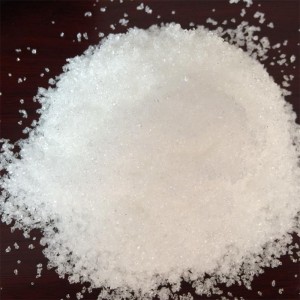
UREA PHOSPHATE for agriculture
Urea phosphate, also known as urea phosphate or urea phosphate, is a ruminant feed additive that is superior to urea and can provide non-protein nitrogen and phosphorus at the same time. It is an organic matter with the chemical formula CO(NH2)2·H3PO4. It is easily soluble in water, and the aqueous solution becomes acidic; it is insoluble in ethers, toluene and carbon tetrachloride. -
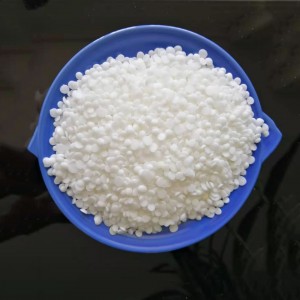
Magnesium Nitrate
Magnesium nitrate is an inorganic substance with a chemical formula of Mg(NO3)2, colorless monoclinic crystal or white crystal. Easily soluble in hot water, soluble in cold water, methanol, ethanol, and liquid ammonia. Its aqueous solution is neutral. It can be used as a dehydrating agent, a catalyst for concentrated nitric acid and a wheat ashing agent and catalyst. -
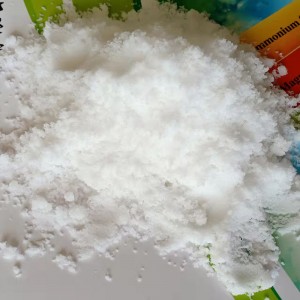
High quality ammonium bicarbonate
Ammonium bicarbonate effect 1. Used as a nitrogen fertilizer, suitable for various soils, and can provide both ammonium nitrogen and carbon dioxide required for crop growth, but the nitrogen content is low and it is easy to agglomerate; 2. Used as an analytical reagent, also used in the synthesis of ammonium salts and fabric degreasing; 3. Used as chemical fertilizer; 4. It can promote crop growth and photosynthesis, promote seedlings to grow leaves, can be used as top dressing, or as base fe... -
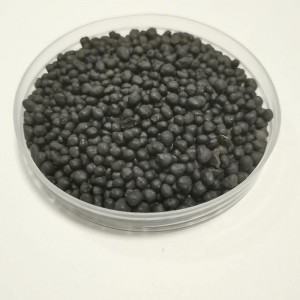
Organic fertilizer
Agricultural use: 1. There are a large number of beneficial microorganisms in the bio-organic fertilizer, which can decompose the organic matter in the soil, increase the soil aggregate structure, and improve the soil composition. Microorganisms multiply very fast in the soil. They are like a big invisible net, intricately intricate. After the death of the microbial cells, many tiny pipes are left in the soil. These tiny pipes not only increase the air permeability of the soil, but also make ... -
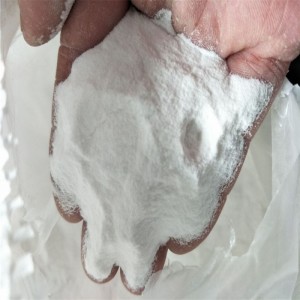
SODIUM BICARBONATE
Agricultural use: Different from industrial soda ash (sodium carbonate) and baking soda (sodium bicarbonate), baking soda is made from a solution or crystal of soda ash after absorbing carbon dioxide. Therefore, baking soda is also called edible alkali (powdered) in some places. Baking soda is solid, round, white in color, and easily soluble in water. White fine crystals, the solubility in water is less than that of sodium carbonate. It is also an industrial chemical. The solid starts to deco... -
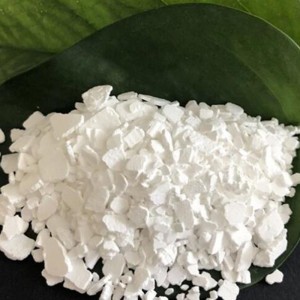
Calcium chloride
Agricultural use: Calcium chloride, a salt composed of chlorine and calcium, has the chemical formula CaCl2. Slightly bitter and tasteless. It is a typical ionic halide, white, hard pieces or particles at room temperature. Its common applications include brine used in refrigeration equipment, road ice melting agents and desiccants. Because it easily absorbs moisture in the air and deliquesces [5], anhydrous calcium chloride must be sealed and stored in a container. Desiccant Calcium chloride ... -
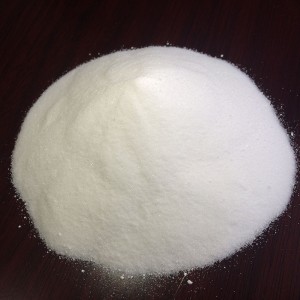
Sodium sulphate Industrial Grade
Industrial anhydrous sodium sulfate (commonly known as sodium sulfate) is an important inorganic chemical raw material, widely used in many industrial fields. The following is a summary of its main uses and specific application scenarios: 1. Papermaking industry Function: As a cooking agent for kraft pulping, it decomposes lignin to improve the quality of pulp. Other functions: Adjust the pH value of pulp, enhance the whiteness and strength of paper, and improve the smoothness of paper as a f... -
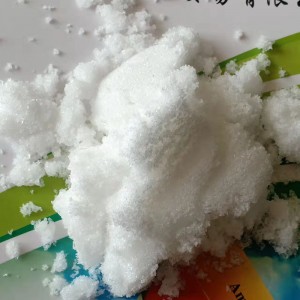
Sodium acetate
Agricultural use: Sodium acetate, also called sodium acetate, is a sodium salt derived from acetic acid. Sodium acetate is a substance that is easily made with vinegar and baking soda. When the mixture cools below its melting point, it will crystallize. Crystallization is an exothermic process, so these crystals actually generate heat, which is why the substance is often called hot ice. This compound has many industrial and daily uses、 The main purpose In the food industry, sodium acetate is... -
oxalic acid
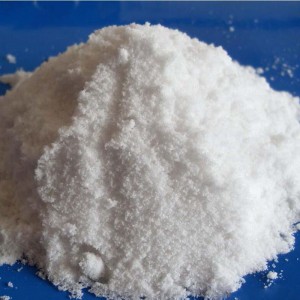
Agricultural use: Oxalic acid is white crystals, much like sugar. Before washing, dissolve one part of oxalic acid in 20 parts of water to make an oxalic acid solution. Then, drop it on the rust spots of the clothes, after scrubbing and rinsing, the rust is gone. Oxalic acid can remove rust because of its strong reducing ability. The iron in the rust spots is trivalent iron, which is not soluble in water. When it touches oxalic acid, it is reduced to divalent iron and can be dissolved in wate... -
SINGLE SUPER PHOSPHATE
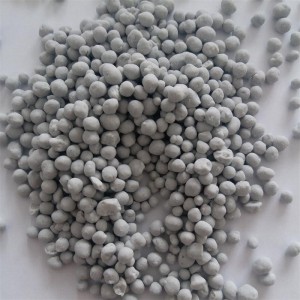
Superphosphate is also called general calcium phosphate, or general calcium for short. It is the first kind of phosphate fertilizer produced in the world, and it is also a kind of phosphate fertilizer widely used in our country. The effective phosphorus content of superphosphate varies greatly, generally between 12% and 21%. Pure superphosphate is dark gray or off-white powder, slightly sour, easy to absorb moisture, easy to agglomerate, and corrosive. After being dissolved in water (the insoluble part is gypsum, accounting for about 40% to 50%), it becomes acidic quick-acting phosphate fertilizer.
usage
Superphosphate is suitable for various crops and various soils. It can be applied to neutral, calcareous phosphorus-deficient soil to prevent fixation. It can be used as base fertilizer, top dressing, seed fertilizer and root top dressing.
When superphosphate is used as the base fertilizer, the application rate per mu can be about 50kg per mu for the soil lacking available phosphorus, and half of it is evenly sprinkled before the cultivated land, combined with the cultivated land as the base fertilizer. Before planting, sprinkle the other half evenly, combine with the ground preparation and apply shallowly into the soil to achieve layered application of phosphorus. In this way, the fertilizer effect of superphosphate is better, and the utilization rate of its effective ingredients is also high. If mixed with organic fertilizer as base fertilizer, the application rate of superphosphate per mu should be about 20-25kg. Concentrated application methods such as ditch application and acupoint application can also be used. -

POTASSIUM CHLORIDE
The chemical formula is KCl, which is a colorless slender rhombus or a cubic crystal, or a small white crystalline powder, with an appearance like table salt, odorless and salty. Commonly used as additives for low sodium salt and mineral water. Potassium chloride is a commonly used electrolyte balance regulator in clinical practice. It has a definite clinical effect and is widely used in various clinical departments.