
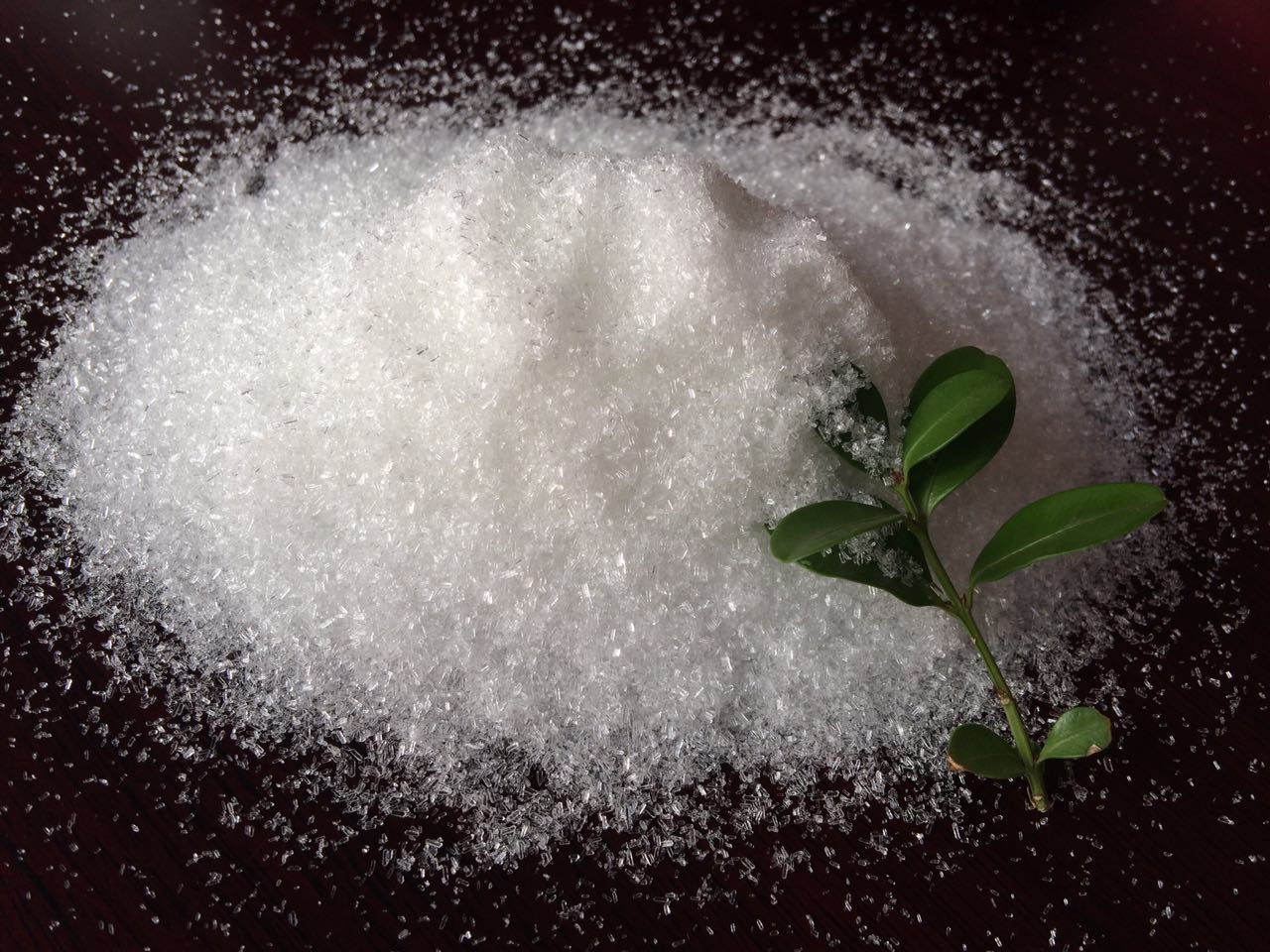
Mono-Potassium Phosphate (0-52-34) is a fully water-soluble, chloride-free fertilizer that delivers the highest concentration of phosphorus and potassium in a single crystal form. With 52% P₂O₅ and 34% K₂O, MKP is the preferred choice for growers seeking precise nutrition during flowering, fruit set, and fruit fill. Its exceptional purity and solubility make it ideal for fertigation, foliar application, and hydroponic systems, where it promotes vigorous root development, abundant blooms, and superior crop quality.
I. Key Agronomic Benefits
High Analysis and Efficiency
MKP contains 52% phosphorus (P₂O₅) and 34% potassium (K₂O), providing more total plant food per kilogram than most other NPK compounds. This high nutrient density reduces storage, handling, and shipping costs while delivering exactly what crops need during critical reproductive stages.
Chloride-Free and Low Salt Index
Unlike potassium chloride (MOP), MKP contains no chloride, making it safe for chloride-sensitive crops such as tobacco, potatoes, citrus, berries, and many vegetables. Its low salt index minimizes the risk of root burn and allows safe application even in high concentrations through drip or foliar systems.
Rapid Solubility and Complete Dissolution
MKP dissolves quickly and completely in water (230 g/L at 20°C), producing clear solutions that will not clog emitters, nozzles, or screens. The absence of insoluble residues ensures uniform distribution in fertigation and hydroponic systems.
pH Buffering and Compatibility
A 1% MKP solution has a pH of approximately 4.5–5.0, which is mildly acidic. This helps maintain nutrient availability in the root zone and is compatible with most water-soluble fertilizers, including calcium nitrate (when injected separately), magnesium sulfate, and micronutrient chelates.
II. Role of Phosphorus and Potassium in Crop Production
Phosphorus (52% P₂O₅) – Energy and Flowering
Phosphorus is essential for ATP (energy transfer), nucleic acids (DNA/RNA), and cell membranes. It drives root development, flowering, fruit set, seed formation, and early maturity. Phosphorus deficiency results in slow growth, purplish leaves, delayed maturity, and poor yields.
Potassium (34% K₂O) – Quality and Stress Tolerance
Potassium regulates stomatal opening (water use), activates over 60 enzymes, and improves disease resistance, drought tolerance, and cold hardiness. It enhances fruit size, color, sugar content (Brix), and shelf life. Potassium deficiency leads to scorched leaf margins, weak stalks, and low-quality produce.
III. Application Methods and Rates
Fertigation (Drip and Sprinkler Systems)
- Rate: 5 to 15 kg per hectare per application, depending on crop stage.
- Timing: Start at early flowering, peak at fruit set, and continue through fruit development.
- Frequency: Apply once every 5–10 days during high-demand periods.
- Benefit: Precise delivery of P and K directly to the root zone, with zero waste.
Foliar Spray
- Concentration: 0.5 to 1.0% (500–1000 g per 100 liters of water).
- Timing: Apply at early bloom, full bloom, and fruit enlargement stages.
- Frequency: 2–3 applications spaced 10–14 days apart.
- Additive: Use a non-ionic surfactant (0.1%) to improve leaf coverage and absorption.
- Benefit: Rapid correction of P/K deficiency, enhanced flowering and fruit quality.
Hydroponic Nutrient Solutions
- Target P level: 30–50 ppm; target K level: 150–250 ppm.
- Use MKP as the primary source of phosphorus and potassium, balanced with calcium nitrate and magnesium sulfate.
- Adjust pH to 5.8–6.2; MKP helps maintain stable pH due to its buffering capacity.
Seed Treatment and Starter Solutions
- Rate: Dip seeds in 0.5% MKP solution for 12 hours to improve germination and early vigor.
- For transplants: 1–2 g per liter water as a root dip before planting.
Soil Application (in arid or P-deficient soils)
- Rate: 100–200 kg per hectare broadcast or banded pre-plant.
- Use when soil test indicates low P or K, but note that MKP is more expensive than MAP or SOP; its high solubility makes it better suited for fertigation.
IV. Technical Specifications
Chemical Properties
- Formula: KH₂PO₄
- Phosphorus (P₂O₅): 52% minimum
- Potassium (K₂O): 34% minimum
- Water-soluble P₂O₅: ≥ 99%
- pH of 1% solution: 4.5 – 5.0
- Electrical conductivity (EC) of 1 g/L: 0.7 mS/cm
Physical Properties
- Appearance: White, free-flowing crystalline powder
- Bulk density: 1100 – 1200 kg/m³
- Particle size: 0.15 – 0.85 mm (standard), fine powder available
- Solubility: 230 g/L at 20°C (fully soluble)
- Moisture: ≤ 0.5%
Quality Standards
- Purity: ≥ 99.0%
- Heavy metals: Cd ≤ 1 ppm, Pb ≤ 2 ppm, As ≤ 1 ppm, Hg ≤ 0.1 ppm
- Chloride (Cl): ≤ 0.01%
- Insoluble matter: ≤ 0.05%
V. Crop-Specific Benefits and Recommendations
Fruit Trees (Citrus, Apple, Grape, Stone Fruits)
- Fertigation or foliar: Apply 5–15 kg/ha/week from flowering through fruit enlargement.
- Results: Increased fruit set, larger fruit size, improved color, higher Brix, and extended shelf life.
- Growers report 15–25% higher marketable yield.
Vegetable Crops (Tomato, Pepper, Cucumber, Eggplant)
- Start fertigation at first bloom: 5–10 kg/ha every 5–7 days.
- Foliar sprays at full bloom and fruit set: 0.5–1.0%.
- Results: Uniform fruit set, reduced blossom-end rot (in combination with calcium), higher sugar content, longer harvest period.
Potatoes and Root Vegetables
- Apply during tuber initiation to bulking: 8–12 kg/ha/week via drip or sprinkler.
- Foliar supplement at 1% during rapid tuber growth.
- Results: Increased tuber number and size, higher specific gravity, better processing quality.
Cereals (Wheat, Barley, Rice)
- Apply MKP at booting and heading stages: 5–10 kg/ha in irrigation water.
- Foliar spray at early heading: 0.5–1.0% solution.
- Results: Improved grain fill, higher test weight, increased protein content.
Oilseeds (Canola, Sunflower, Soybeans)
- Apply at early flowering and pod/seed set: 5–10 kg/ha as foliar or through fertigation.
- Results: More pods/head, higher oil content, and reduced shattering.
Ornamentals and Turf
- Drip or spray application at 0.5–1.0% weekly promotes strong stems, vibrant flowers, and deep green color without excess vegetative growth.
VI. Environmental and Safety Profile
Soil Health
MKP does not leave harmful residues. The phosphorus and potassium are taken up by plants or become part of the soil exchange complex. Because it is chloride-free, MKP does not contribute to salinity or sodicity.
Water Quality
When used in fertigation at recommended rates, leaching of P and K is minimal because the nutrients are applied in sync with crop demand. However, avoid over‑application on sandy soils.
Safety Precautions
MKP is not classified as hazardous. Nevertheless, wear gloves and a dust mask when handling large quantities. In case of eye contact, flush with water. If ingested, drink water and seek medical advice. Store in a dry, clean area away from children.
Storage
Keep in original sealed bags. Shelf life: 36 months under proper conditions (cool, dry, protected from moisture).
VII. Advantages Over Other Phosphorus and Potassium Sources
Versus Potassium Chloride (MOP)
- MKP contains no chloride, eliminating toxicity in sensitive crops.
- Provides phosphorus as well as potassium (MOP supplies only K).
- Higher solubility and lower salt index.
Versus Mono-Ammonium Phosphate (MAP)
- MKP supplies potassium (MAP provides none) and has a lower salt index.
- MKP is preferred for fruit quality and late‑season applications where nitrogen is not wanted.
Versus Potassium Sulfate (SOP)
- MKP delivers both P and K in one product (SOP provides only K + S).
- MKP has higher solubility and is more suitable for fertigation and foliar use.
Economic Efficiency
While MKP is more expensive per kilogram than MAP or MOP, its high analysis and dual‑nutrient content reduce the number of products needed. When used during reproductive stages, the quality and yield improvements often deliver a return on investment of 5:1 or higher.
VIII. Quality Assurance and Certifications
Our MKP is manufactured in ISO 9001:2015 and ISO 14001:2015 certified facilities. Each batch is lab‑tested for purity, solubility, heavy metals, and chloride content. We provide certificates of analysis with every shipment. OMRI‑listed options are available for organic production.
IX. Why Choose Our Mono-Potassium Phosphate
Consistent Quality
We guarantee 0-52-34 analysis with less than 0.01% chloride and low heavy metals, ensuring safety for all crops.
Crystal Clarity
Our MKP dissolves completely, leaving no residues in tanks or irrigation lines.
Technical Support
Our agronomists help you integrate MKP into your fertility program, including rates, timing, and tank‑mix compatibility.
Flexible Packaging
Available in 25 kg bags, 1‑ton big bags, and bulk containers. Custom packaging and private labeling available.
Post time: Sep-08-2026