
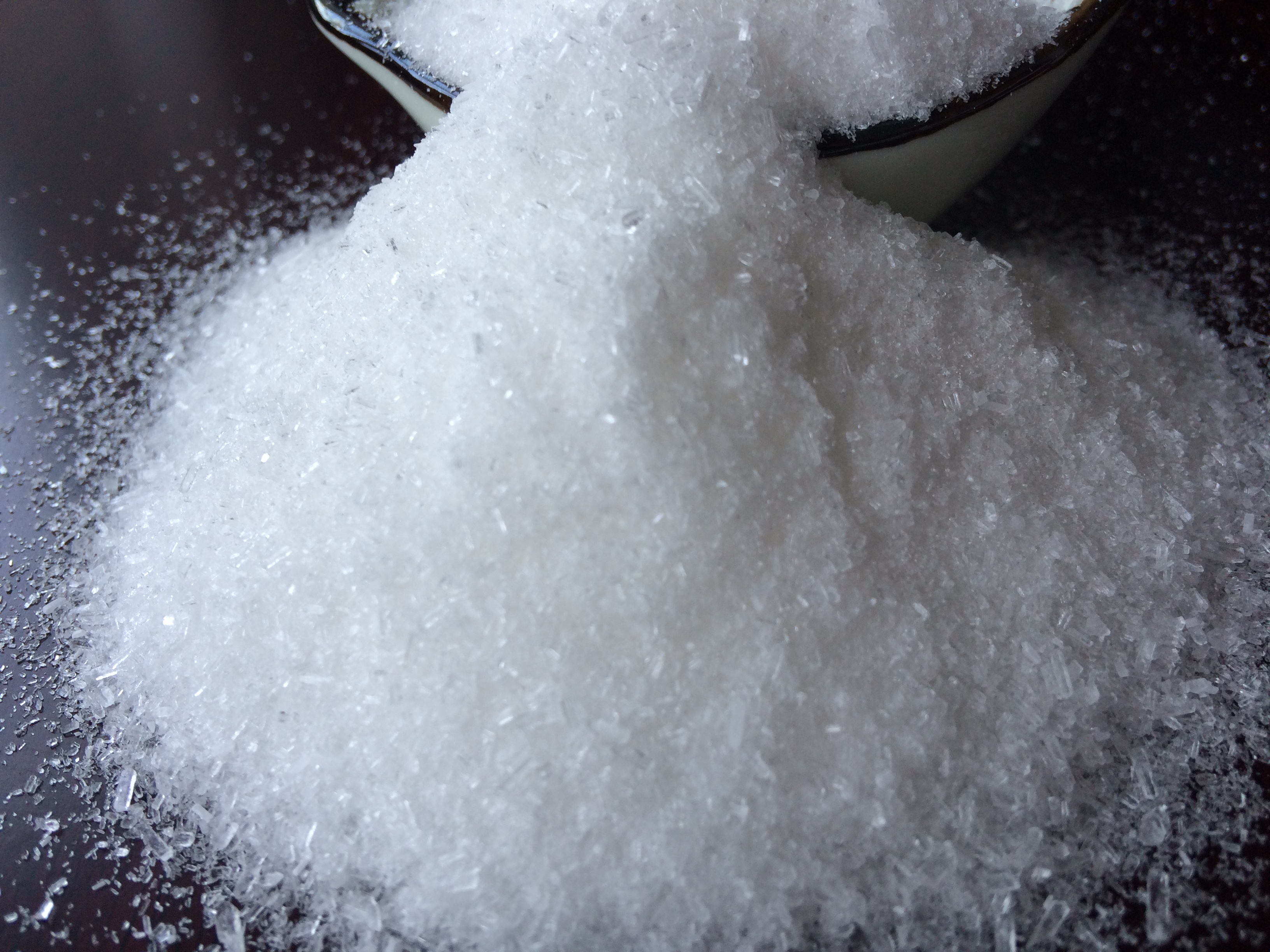
Magnesium Sulfate Heptahydrate (MgSO₄·7H₂O), commonly known as Epsom salt, is one of agriculture’s most trusted and versatile fertilizers. With 9.8% magnesium and 13% sulfur in immediately available sulfate forms, this crystalline material provides essential nutrition that drives photosynthesis, activates enzymatic systems, and enhances crop quality across diverse agricultural systems. For growers seeking to correct magnesium deficiencies, improve crop vigor, and maximize marketable yield, magnesium sulfate heptahydrate delivers reliable, cost-effective results.
I. The Critical Role of Magnesium in Plant Health
Magnesium occupies a unique and irreplaceable position in plant physiology, serving functions that no other nutrient can fulfill.
The Heart of Chlorophyll
Magnesium is the central atom in the chlorophyll molecule. Without adequate magnesium, chlorophyll synthesis stops, and photosynthesis grinds to a halt. Each chlorophyll molecule requires one magnesium atom to function, making this nutrient essential for capturing the sun’s energy and converting it into plant growth.
Enzyme Activation
Magnesium activates more than 300 enzymes involved in critical plant processes. It activates enzymes responsible for ATP (adenosine triphosphate) production, the energy currency of plant cells. It is essential for carbohydrate metabolism, including sugar synthesis and transport. Magnesium is required for ribosome structure and function in protein synthesis, involved in fatty acid formation for oil production in oilseed crops, and supports DNA and RNA formation through nucleic acid synthesis.
Phosphorus Utilization
Magnesium facilitates phosphorus uptake and translocation within plants, enhancing the efficiency of phosphate fertilizers and improving overall nutrient use efficiency.
Sugar Transport
Magnesium plays a vital role in moving sugars produced during photosynthesis from leaves to developing fruits, grains, and roots, directly impacting yield and quality.
II. Sulfur’s Essential Contributions
The sulfate component of magnesium sulfate provides equally critical functions. Sulfur is a component of the amino acids methionine and cysteine, which are essential for protein synthesis. Without adequate sulfur, protein formation stops, and crop quality suffers.
Sulfur-containing enzymes drive numerous metabolic processes, including nitrogen fixation in legumes and chlorophyll formation. Sulfur contributes to the characteristic flavors and aromas of crops like onions, garlic, and cruciferous vegetables, directly impacting market value. Sulfur-containing compounds help plants resist environmental stresses including drought, cold, and disease pressure.
III. Magnesium Deficiency: Recognition and Impact
Visible Deficiency Symptoms in General Appearance
Early symptoms include interveinal chlorosis, which is yellowing between leaf veins on older leaves. As symptoms progress, yellowing advances from leaf edges inward while veins remain green. In severe cases, leaf margins curl upward, leaves develop reddish-purple discoloration, necrosis occurs, and premature leaf drop follows.
Crop-Specific Symptoms
In cereal crops including wheat, corn, and rice, symptoms include yellowish striping between veins on older leaves, reduced tillering and stunted growth, poor grain fill and reduced test weight. In rice, parch blight characterized by yellowing and drying of lower leaves may appear.
In potatoes and root crops, symptoms include interveinal chlorosis on lower leaves, leaf margins curling upward, reduced tuber size and specific gravity, and poor storage quality.
In fruit trees including citrus, apples, and stone fruits, symptoms include yellowing between veins on older leaves, premature leaf drop, reduced fruit size and sugar content, and poor fruit color development.
In vegetable crops, tomatoes show yellowing between veins on older leaves and leaf cupping. Peppers display interveinal chlorosis and reduced fruit set. Crucifers exhibit yellowing of lower leaves and poor head development.
In oilseed crops including canola and sunflower, symptoms include interveinal chlorosis on lower leaves, purple discoloration on leaf margins, and reduced oil content and quality.
IV. Soil Conditions Affecting Magnesium Availability
Magnesium deficiency rarely indicates low total soil magnesium. More commonly, availability is reduced by specific soil conditions.
In low pH acidic conditions, magnesium availability decreases in strongly acidic soils below pH 5.5, where hydrogen and aluminum ions compete for uptake.
In high pH alkaline conditions, particularly in calcareous soils, magnesium can precipitate as insoluble compounds, reducing availability.
In sandy soils, low cation exchange capacity and high leaching potential result in magnesium loss, particularly in high-rainfall areas or under irrigation.
High levels of potassium or ammonium in soil solution compete with magnesium for plant uptake, inducing deficiency even when soil magnesium is adequate.
Excessive calcium relative to magnesium can suppress magnesium uptake, particularly in soils with high calcium to magnesium ratios.
Cool, wet conditions with cold, waterlogged soils slow root activity and reduce magnesium uptake, often causing temporary deficiency symptoms in spring.
V. Application Methods and Recommendations
Soil Application
For broadcast and incorporation, apply 20 to 50 kg per hectare for magnesium-deficient soils. Timing should be before planting with incorporation into the root zone. This method is best for building baseline magnesium levels and long-term correction. Frequency is every 1 to 2 years in responsive soils.
For banded application, apply 10 to 25 kg per hectare placed near seed rows. This provides concentrated availability for early season uptake. Placement should be 5 cm below and beside the seed row. This method is best for row crops with high early-season magnesium demand.
For side-dressing, apply 15 to 30 kg per hectare during active growth. Timing should be when deficiency symptoms appear or as a preventative measure. Apply by broadcasting along crop rows and incorporate with cultivation or irrigation.
Foliar Spray Application
For standard concentration, apply 5 to 15 kg per hectare in 200 to 400 liters of water. Solution strength should be 1 to 2% (1 to 2 kg per 100 liters of water). Timing should be early morning or late afternoon to maximize absorption. Frequency is 1 to 3 applications at 10 to 14 day intervals for deficiency correction.
Critical timing windows vary by crop. For cereals, apply at tillering to boot stage. For potatoes, apply at tuber initiation to bulking. For fruit trees, apply post-bloom and during fruit development. For vegetables, apply throughout active growth, especially during fruiting. For oilseeds, apply at rosette to early flowering.
Additives may include non-ionic surfactant at 0.1% for improved leaf coverage. The product is compatible with most pesticides and fertilizers, though a jar test should be conducted first. Avoid mixing with highly alkaline materials.
Fertigation and Hydroponics
For fertigation, maintain 50 to 100 ppm magnesium in nutrient solutions. Apply 5 to 15 kg per hectare per application through irrigation systems. Frequency should be weekly or bi-weekly during active growth. The product is fully soluble with no clogging of drip emitters or injectors.
For hydroponic nutrient solutions, maintain 40 to 60 ppm magnesium for most crops. Adjust based on crop type, growth stage, and water quality. Monitor solution pH and electrical conductivity regularly.
Seed Treatment
Use a concentration of 0.5 to 1.0% solution. Soak seeds for 10 to 15 minutes before planting. This provides early magnesium during critical establishment phase. The treatment is compatible with standard seed treatment equipment.
VI. Technical Specifications
Chemical Properties
Chemical formula: MgSO₄·7H₂O
Magnesium content: 9.8% minimum (16.2% MgO equivalent)
Sulfur content: 13.0% minimum (as sulfate)
Molecular weight: 246.47 g/mol
pH of 1% solution: 5.5 to 7.5
Solubility: 710 grams per liter at 20°C
Physical Properties
Form: Crystalline powder or granules
Color: White to off-white
Bulk density: 1000 to 1100 kg per cubic meter for powder form
Particle size: 0.1 to 1.0 mm for standard powder, 1 to 3 mm for granular
Moisture content: ≤0.5%
Hygroscopicity: moderate, requiring storage in dry conditions
Quality Standards
Purity: ≥99.0% magnesium sulfate heptahydrate
Heavy metals as Pb: ≤10 ppm
Arsenic: ≤2 ppm
Cadmium: ≤1 ppm
Lead: ≤5 ppm
Chlorides: ≤0.01%
Iron: ≤20 ppm
Insoluble matter: ≤0.05%
Available Grades
Agricultural Standard Grade is optimal for soil and foliar applications. Fine Crystal Grade provides rapid dissolution for fertigation and hydroponics. Granular Grade offers uniform particles for blending and broadcasting. Feed Grade is available for animal nutrition supplementation. Pharmaceutical Grade provides high purity for specialized applications. OMRI Listed options are certified for organic production systems.
VII. Crop-Specific Performance
Cereal Crops (Wheat, Corn, Rice)
Apply 20 to 40 kg per hectare pre-plant for soil application. Foliar program of 5 to 10 kg per hectare at tillering and boot stages is effective. Expected response is 10 to 20% yield increase in deficient conditions with improved grain protein.
Potatoes and Root Crops
Apply 25 to 50 kg per hectare pre-plant for soil application. Foliar program of 10 to 15 kg per hectare at tuber initiation and bulking is effective. Expected response is 15 to 25% yield increase, improved specific gravity, and better storage quality.
Fruit Trees (Citrus, Apples, Stone Fruits)
Apply 0.5 to 2.0 kg per tree in root zone, depending on tree size. Foliar program of 1 to 2% solution post-bloom and during fruit development is effective. Expected response includes improved fruit size, color, and sugar content, and reduced pre-harvest drop.
Vegetable Crops
Apply 20 to 40 kg per hectare pre-plant for soil application. Foliar program of 5 to 10 kg per hectare every 10 to 14 days during active growth is effective. Expected response includes improved quality, yield, and marketability.
Oilseed Crops (Canola, Sunflower)
Apply 20 to 30 kg per hectare pre-plant for soil application. Foliar program of 5 to 10 kg per hectare at rosette and early flowering is effective. Expected response is 10 to 15% yield increase and improved oil content.
Greenhouse and Hydroponic Crops
Nutrient solution should maintain 40 to 60 ppm magnesium. Foliar supplement of 1% solution can be used as needed for rapid correction. Expected response is consistent quality and maximum yield potential.
Turf and Ornamentals
Apply 20 to 40 kg per hectare for soil application. Foliar application of 0.5 to 1% solution can be used as needed. Expected response includes improved color, density, and stress tolerance.
VIII. Documented Performance Benefits
Yield Enhancement
Cereal crops show 10 to 20% yield increase in responsive conditions. Potatoes show 15 to 25% increase in marketable tuber production. Fruit crops show 10 to 20% enhancement in fruit set and size. Vegetables show 15 to 25% improvement in marketable yield.
Quality Improvements
Grain quality benefits include higher protein content and improved test weight. Fruit quality benefits include increased sugar content (Brix), better color development, and extended shelf life. Tuber quality benefits include improved specific gravity, better processing characteristics, and reduced internal defects. Vegetable quality benefits include enhanced appearance, better nutritional value, and longer storage life.
Physiological Benefits
Enhanced photosynthetic efficiency occurs through optimized chlorophyll function. Improved phosphorus utilization results from magnesium’s role in phosphorus translocation. Stronger stress tolerance develops against drought, cold, and heat. Better disease resistance occurs through improved plant vigor.
Economic Returns
Cereals provide 3 to 5 dollars return per 1 dollar invested in deficient conditions. Potatoes provide 5 to 8 dollars return from increased marketable yield. Fruit crops provide 6 to 10 dollars return through quality premiums. Vegetables provide 4 to 7 dollars return from improved quality and yield.
IX. Compatibility and Mixing Guidelines
Compatible Products
Most nitrogen fertilizers including urea, ammonium nitrate, and ammonium sulfate are compatible. Most potassium fertilizers including potassium chloride and potassium sulfate are compatible. Most phosphate fertilizers including monoammonium phosphate, diammonium phosphate, and triple superphosphate are compatible. Most pesticides and fungicides are compatible, though a jar test should be conducted first. Non-ionic surfactants and adjuvants are compatible.
Incompatible or Limited Compatibility
Highly alkaline materials such as lime and wood ash should be avoided. Concentrated phosphate solutions may form precipitates. Products containing calcium at high concentrations such as gypsum and calcium nitrate may have limited compatibility.
Mixing Procedure
Fill the spray tank with half the required water. Add compatibility agents if needed. Add magnesium sulfate while agitating. Add other products in order of compatibility. Add remaining water and maintain agitation. Use within 24 hours of mixing.
Tank Mix Test Protocol
Mix a small sample in proportion to the final mixture. Observe for precipitation, gelation, or color change. Test on a small area before full application.
X. Environmental and Safety Profile
Environmental Behavior
Magnesium is an essential nutrient, not an environmental pollutant. Sulfate form is plant-available and environmentally benign. There is low toxicity to soil organisms and beneficial insects. These are naturally occurring mineral compounds.
Responsible Use Guidelines
Follow recommended rates based on soil testing. Avoid over-application in sensitive areas. Use buffer zones near aquatic environments. Monitor soil levels periodically.
Safety Precautions
For personal protection, wear dust mask, gloves, and eye protection during handling. Avoid inhaling dust during mixing. Wash hands thoroughly after handling.
For first aid measures in case of eye contact, flush with water for 15 minutes and seek medical attention if irritation persists. For skin contact, wash with soap and water. For inhalation, move to fresh air. For ingestion, drink water and seek medical attention if a large amount is consumed.
Storage Requirements
Store in original containers in a cool, dry area. Keep away from moisture and incompatible materials. Protect from physical damage. Shelf life is 24 months when properly stored.
XI. Quality Assurance and Certifications
The product meets ISO 9001:2015 Quality Management Certified standards. It holds ISO 14001:2015 Environmental Management certification. It is OHSAS 18001 Occupational Health and Safety certified. It is REACH Registered. It complies with EU Fertilizer Product Regulation. OMRI Listed options are available for organic production. Halal and Kosher certified options are available.
XII. Why Choose Our Magnesium Sulfate Heptahydrate
Superior Quality
Consistent high purity with guaranteed analysis is maintained. Low heavy metal content exceeds international standards. Excellent solubility ensures reliable performance. Batch-to-batch uniformity provides predictable results.
Technical Expertise
Crop-specific recommendation protocols are available. Deficiency diagnosis assistance is provided. Soil and tissue test interpretation is offered. Integrated nutrient management planning is supported.
Application Flexibility
Multiple grades for various application methods are available. The product is compatible with all modern application equipment. It is suitable for conventional and organic systems. Custom formulations are available.
Supply Reliability
Multiple production facilities ensure consistent supply. A strategic global warehouse network supports distribution. Flexible packaging options are offered. Timely delivery commitments are maintained.
Sustainable Production
Energy-efficient manufacturing processes are employed. Water conservation initiatives are implemented. Waste reduction programs are active. Responsible raw material sourcing is practiced.
XIII. Ordering and Support
Product Availability
Agricultural Standard Grade is available in 25 kg bags and 50 kg bags. Fine Crystal Grade is available in 25 kg bags. Granular Grade is available in 25 kg bags and 1-ton bulk bags. Feed Grade is available in 25 kg bags. Pharmaceutical Grade is available in custom packaging. Bulk quantities are available in container loads and vessel quantities.
Packaging Options
Multi-layer paper bags with polyethylene liner are available. Plastic woven bags are available. FIBC bulk bags (super sacks) are available. Custom packaging is available upon request.
Technical Services
Soil and tissue test interpretation is provided. Deficiency diagnosis and treatment planning is offered. Application equipment guidance is available. Economic analysis of investment returns is provided. Crop-specific program development is supported.
Post time: Sep-10-2026