
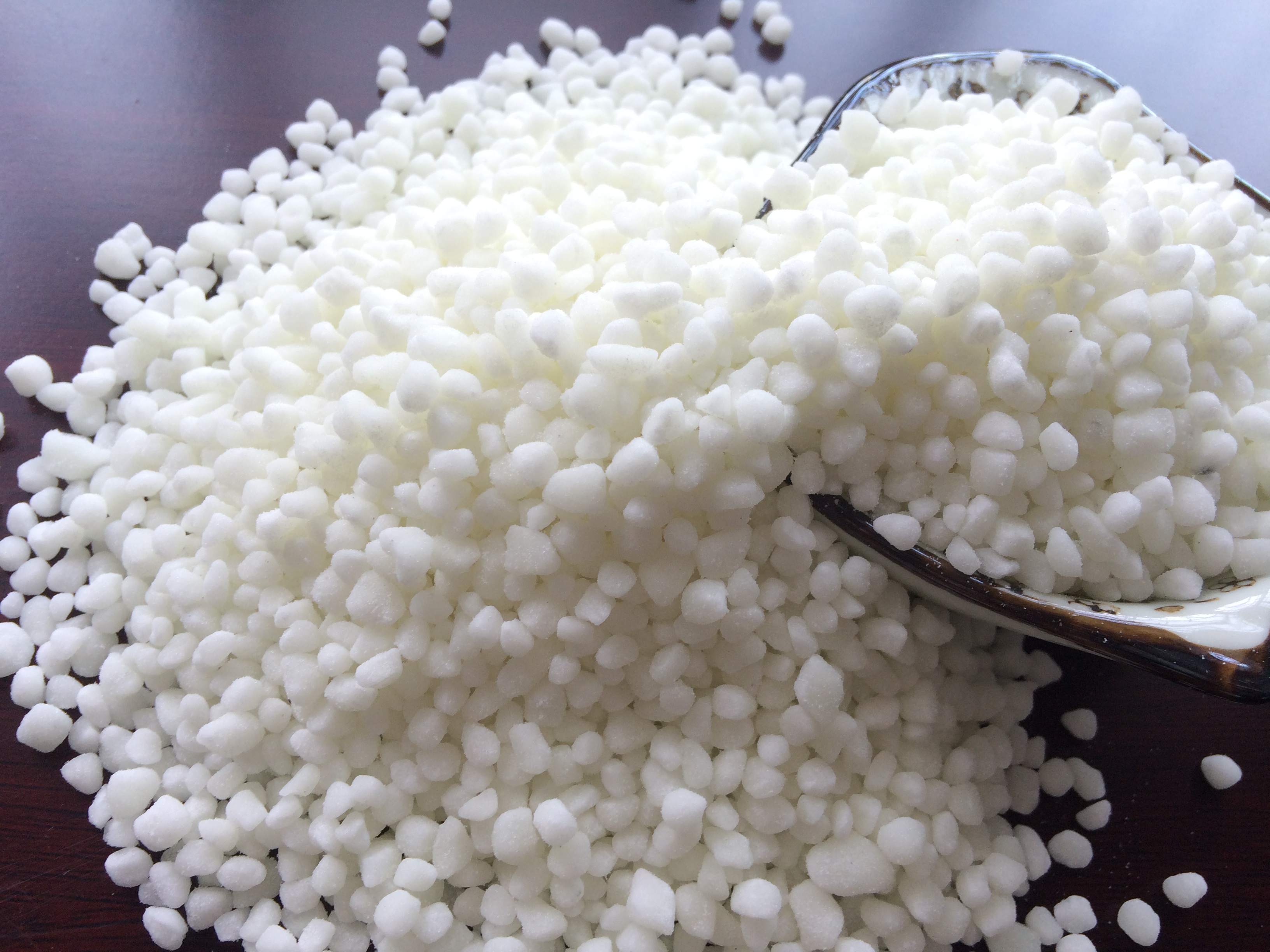
Granular Ammonium Sulfate (21-0-0-24S) represents the evolution of a proven fertilizer into a modern, high-performance product designed for today’s precision agriculture. By combining the agronomic benefits of ammonium sulfate with the physical advantages of uniform, dust-free granules, this premium fertilizer delivers superior handling characteristics, precise application accuracy, and consistent crop response. For growers seeking to maximize nitrogen and sulfur efficiency while minimizing waste and labor, granular ammonium sulfate is the intelligent choice.
The Granular Advantage: Why Form Matters
Uniform Size for Precision Application
Our granular ammonium sulfate features 2-4 mm granules with 95% uniformity, ensuring consistent flow through all types of application equipment. This uniformity enables variable-rate technology and GPS-guided spreading with exceptional accuracy, eliminating skips and overlaps that waste product and reduce yield potential.
Dust-Free Handling for Operator Safety
Unlike powdered or crystalline forms, granular ammonium sulfate contains less than 0.1% dust, protecting operator health and reducing product loss during handling. The clean, free-flowing granules minimize equipment cleanup time and eliminate the respiratory irritation associated with dusty products.
High Crush Strength for Mechanical Application
With crush strength exceeding 50 Newtons, our granules withstand the rigors of mechanical handling, blending, and application without breaking down. This durability ensures consistent particle size distribution throughout the supply chain and into the field.
Excellent Flowability for Blending Compatibility
The spherical, free-flowing granules blend uniformly with other granular fertilizers, maintaining homogeneity during mixing, transport, and application. This compatibility is essential for custom blending operations and precision nutrient management programs.
Core Agronomic Benefits
Dual Nutrient Supply in One Product
Granular ammonium sulfate delivers 21% nitrogen in the ammonium form and 24% sulfur in the immediately available sulfate form. This dual-nutrient package addresses two critical crop requirements simultaneously, eliminating the need for separate sulfur applications and simplifying fertility programs.
Immediate Nitrogen Availability
The ammonium nitrogen form provides several agronomic advantages. It is immediately available for plant uptake while being held by soil colloids, reducing leaching potential compared to nitrate nitrogen. This combination of immediate availability and soil retention ensures efficient nitrogen utilization throughout the growing season.
Essential Sulfur Nutrition
Sulfur deficiency is increasingly common in modern agriculture due to reduced atmospheric deposition and higher crop removal rates. Granular ammonium sulfate provides 24% sulfur in the sulfate form, which plants can absorb directly. Sulfur is essential for protein synthesis, enzyme activation, and oil formation in crops like canola, soybeans, and sunflowers.
Soil Acidification for Alkaline Soils
As a physiologically acid fertilizer, ammonium sulfate helps lower soil pH in alkaline conditions, improving the availability of phosphorus and micronutrients. This acidifying effect is particularly valuable in calcareous soils where nutrient availability is often limited by high pH.
Low Volatility for Environmental Stewardship
Compared to urea, granular ammonium sulfate has significantly lower ammonia volatilization potential, especially when surface-applied or incorporated. This reduced loss means more of the applied nitrogen reaches the crop, improving efficiency and reducing environmental impact.
Crop Response and Quality Enhancement
Cereal Crops (Wheat, Corn, Rice)
Field trials demonstrate that granular ammonium sulfate increases grain yield by 15 to 25% in sulfur-responsive soils. Protein content improves by 1.5 to 2.5%, enhancing milling and baking quality. Test weight increases, and grain fill is more complete, resulting in higher market grades.
Oilseed Crops (Canola, Sunflower, Soybeans)
Sulfur is critical for oil synthesis in oilseeds. Granular ammonium sulfate applications increase oil content by 3 to 8% in canola and sunflowers. In soybeans, it enhances nitrogen fixation through improved nodulation and increases protein content. Overall yield improvements range from 10 to 20% in sulfur-deficient conditions.
Potatoes and Root Crops
Potatoes respond strongly to balanced nitrogen and sulfur nutrition. Granular ammonium sulfate applications increase tuber yield by 15 to 25% while improving specific gravity, reducing hollow heart and internal discoloration, and enhancing processing quality for french fries and chips.
Vegetable Crops
Onions, garlic, and cruciferous vegetables benefit from the sulfur component, which enhances flavor compounds and storage quality. Leafy vegetables show deeper green color and improved nutritional value. Marketable yield increases of 10 to 20% are common in responsive crops.
Forage and Pasture
Grass and legume forages respond with increased protein content and dry matter yield. The sulfur component enhances the nutritional value for livestock, improving animal performance. Forage yields increase by 15 to 30% in sulfur-deficient soils.
Technical Specifications
Chemical Composition
Total nitrogen: 21.0% minimum in ammonium form
Sulfur: 24.0% minimum as sulfate
Free acid: 0.05% maximum
Moisture: 0.5% maximum
Physical Properties
Granule size: 2-4 mm with 95% within range
Crush strength: greater than 50 Newtons
Bulk density: 1000 to 1100 kg per cubic meter
Dust content: less than 0.1%
Angle of repose: 28 to 32 degrees
Hygroscopicity: Low under normal storage conditions
Quality Standards
Heavy metals: Cadmium ≤1 ppm, Lead ≤5 ppm, Arsenic ≤1 ppm
Insoluble matter: ≤0.05%
Color: White to off-white
Solubility: 750 grams per liter at 20°C
Application Guidelines
Soil Application Rates
For field crops with moderate sulfur requirements, apply 200 to 300 kg per hectare. For crops with high sulfur requirements including canola, onions, and crucifers, apply 300 to 400 kg per hectare. For sulfur-deficient soils and responsive crops, apply 400 to 500 kg per hectare. Split applications between pre-plant and top-dressing are recommended for sandy soils or high-rainfall areas.
Application Methods
For broadcast application, apply uniformly across the field and incorporate within 24 hours to maximize nitrogen efficiency. For banded application, place 5 cm below and 5 cm beside the seed row for concentrated availability. For top-dressing, apply at tillering for cereals or during active growth for other crops. For blending, combine with other granular fertilizers for custom formulations.
Timing Considerations
Pre-plant application is ideal for crops with extended growing seasons and sulfur-responsive crops. Early top-dressing is effective for cereals at tillering stage and for canola at rosette stage. Split applications are recommended for sandy soils to reduce leaching potential. Foliar applications are not typical for granular products, though water-soluble grades are available for fertigation.
Fertigation Use
While designed for soil application, fine-grade granular ammonium sulfate can be used in fertigation systems. For drip and sprinkler systems, use 50 to 100 kg per hectare per application. For solution preparation, dissolve in water with agitation. Ensure compatibility with other fertilizers in solution.
Environmental and Safety Considerations
Soil Health
When used at recommended rates, granular ammonium sulfate does not contribute to long-term soil acidification. The ammonium form is converted to nitrate by soil microorganisms, releasing hydrogen ions that temporarily lower soil pH. This acidifying effect can be beneficial in alkaline soils but should be monitored with regular soil testing.
Water Quality
The ammonium form is held by soil colloids, reducing leaching potential compared to nitrate fertilizers. Proper timing and rate management further minimize environmental impact. Avoid application on frozen or waterlogged soils.
Storage and Handling
Store in a cool, dry, well-ventilated area. Protect from moisture to prevent caking. Keep away from strong oxidizing agents and incompatible materials. Shelf life is 24 months under proper storage conditions. Use appropriate personal protective equipment during handling including gloves, dust mask, and safety glasses.
Quality Assurance
Our granular ammonium sulfate is manufactured under strict quality control procedures. ISO 9001:2015 certification ensures consistent product quality. ISO 14001:2015 certification demonstrates environmental responsibility. Batch-to-batch uniformity guarantees predictable performance. Complete traceability from production to delivery provides supply chain security.
Why Choose Granular Ammonium Sulfate
Superior Handling Characteristics
The uniform, free-flowing granules minimize bridging in bins and hoppers, ensuring consistent flow during application. Low dust content improves operator safety and reduces product loss. High crush strength maintains particle integrity during blending and transport.
Application Precision
95% uniformity within 2-4 mm range enables variable-rate application accuracy. GPS-compatible granules ensure precise placement for maximum efficiency. Reduced drift and segregation mean more product reaches the intended target.
Agronomic Excellence
The combination of ammonium nitrogen and sulfate sulfur provides complete nutrition for crops with high sulfur requirements. Immediate availability of both nutrients ensures rapid crop response. Soil acidification benefits alkaline soil conditions.
Economic Value
Reduced waste through precise application saves product and money. Lower dust loss means more product in the field. Improved crop response delivers higher yield and quality. Simplified fertility programs reduce application costs.
Crop-Specific Recommendations
Wheat and Barley
Apply 200 to 300 kg per hectare pre-plant or at tillering. Response is greatest in sulfur-deficient soils and after high nitrogen applications. Expect 10 to 20% yield increase with improved protein content.
Corn
Apply 150 to 250 kg per hectare pre-plant or at planting. Banding near the seed row provides early availability. Response is significant in coarse-textured soils and after heavy rainfall.
Canola
Apply 300 to 400 kg per hectare pre-plant or split between pre-plant and rosette stages. Canola has high sulfur requirements for oil synthesis. Expect 15 to 25% yield increase with improved oil content.
Potatoes
Apply 250 to 350 kg per hectare pre-plant or at planting. Sulfur improves tuber quality and specific gravity. Expect 15 to 25% yield increase with reduced internal defects.
Onions and Garlic
Apply 200 to 300 kg per hectare pre-plant and at bulb initiation. Sulfur enhances pungency and storage quality. Expect 10 to 20% yield increase with improved marketable grade.
Forages
Apply 150 to 250 kg per hectare after each cutting or grazing. Sulfur improves protein content and palatability. Expect 15 to 25% dry matter yield increase.
Ordering and Technical Support
Product Availability
Granular ammonium sulfate is available in 25 kg bags, 50 kg bags, and 1-ton bulk bags. Custom packaging is available upon request. Bulk shipments are available in container loads and vessel quantities.
Technical Services
Soil test interpretation and recommendation services are provided. Application equipment guidance and calibration support are available. Deficiency diagnosis and troubleshooting are offered. Economic analysis of investment returns is provided. Crop-specific fertility program development is supported.
Post time: Sep-10-2026