
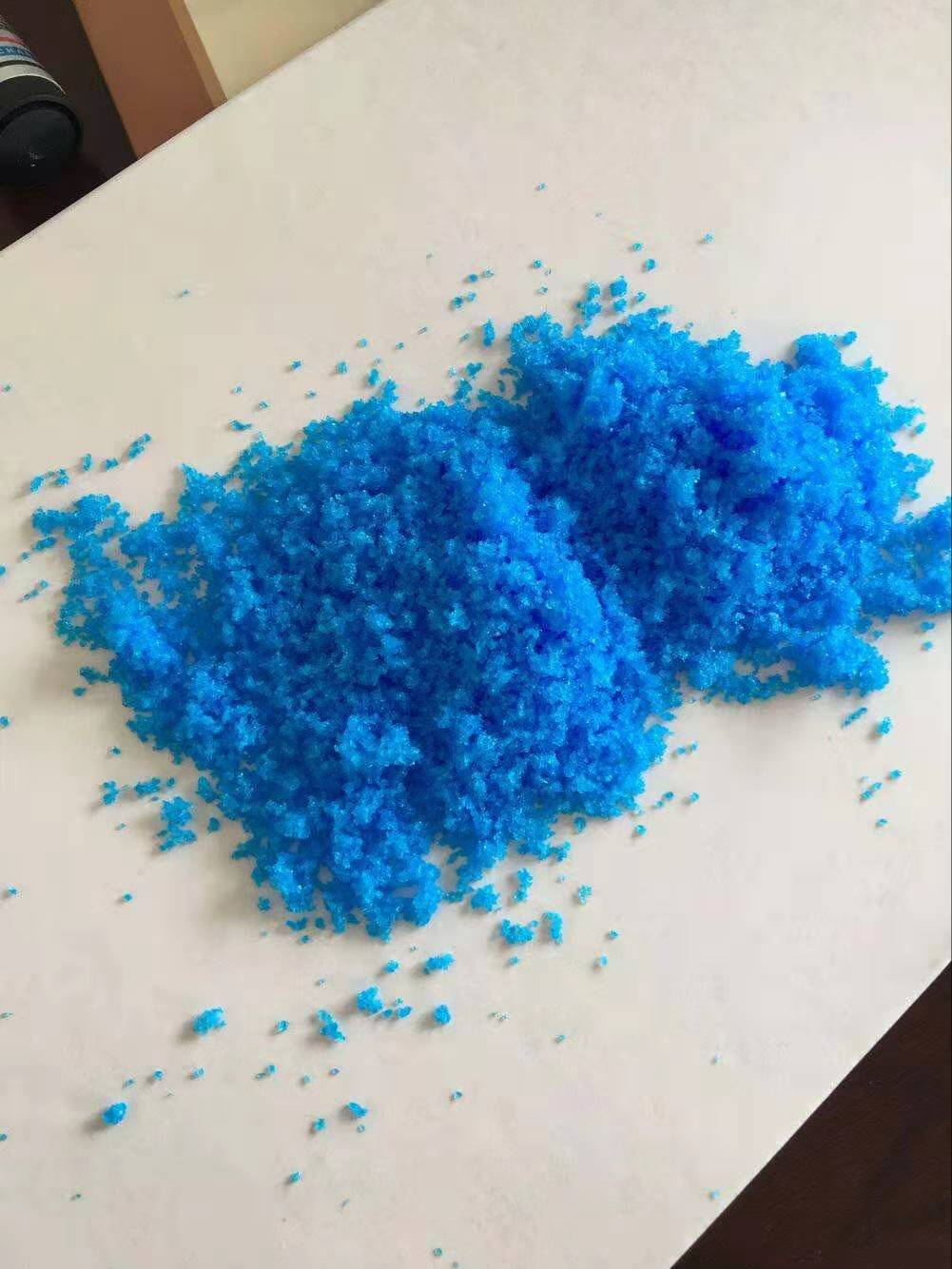
Copper Sulfate Pentahydrate (CuSO₄·5H₂O) is one of agriculture’s most enduring and versatile tools. As both an essential micronutrient and a broad‑spectrum fungicide/bactericide, it helps growers correct copper deficiencies and protect crops from a wide range of fungal and bacterial diseases. With 25% copper in a highly soluble form, our high‑purity copper sulfate delivers rapid plant uptake and reliable disease suppression, making it a cornerstone of integrated crop management for orchards, vineyards, vegetables, and field crops.
I. The Essential Role of Copper in Plant Health
Copper is a required micronutrient that activates several key enzymes in plants. It plays vital roles in:
- Photosynthesis and respiration – Copper is a component of plastocyanin, a protein involved in electron transport during photosynthesis.
- Lignin synthesis – Copper strengthens cell walls, improving standability and resistance to pathogens.
- Reproductive development – Copper influences pollen formation, seed set, and grain fill.
- Stress tolerance – Copper‑dependent enzymes help detoxify reactive oxygen species, enhancing tolerance to drought and heat.
When copper is deficient, plants suffer from stunted growth, leaf distortion, dieback of shoots, poor fruit set, and increased susceptibility to disease.
II. Recognizing Copper Deficiency
Typical symptoms by crop group:
- Cereals (wheat, barley, oats): Young leaves wilt, turn pale green, and may fail to unroll; heads are malformed or empty (“white tip” or “steam‑boiled” appearance).
- Fruit trees (citrus, apple, stone fruits): “Summer dieback” of shoots, multiple buds at a node, fruit cracking, gumming, and poor fruit colour.
- Vegetables (tomato, onion, lettuce): Stunted growth, distorted new leaves, poor flowering, and necrotic spots on young leaves.
- Vines (grape): Interveinal chlorosis of young leaves, shoot dieback, and reduced berry set.
Copper deficiency is most common on organic (peat) soils, sandy soils low in organic matter, and highly weathered tropical soils. It can also be induced by excessive nitrogen or phosphorus fertilisation.
III. Copper as a Broad‑Spectrum Fungicide and Bactericide
Copper ions disrupt the cell membranes and enzymes of fungal spores and bacteria, providing effective contact protection. Our copper sulfate is a key ingredient in the preparation of Bordeaux mixture (copper sulfate + lime) and other copper‑based sprays.
Diseases controlled by copper include:
- Fungal diseases: Downy mildew (grape, cucurbits, onion), powdery mildew (many crops), leaf spots, anthracnose, early and late blight (potato, tomato), apple scab, and brown rot.
- Bacterial diseases: Citrus canker, fire blight (apple, pear), bacterial spot (pepper, tomato), bacterial blight (cotton, beans), and walnut blight.
- Algae and moss: Copper sulfate is also used to control algae in irrigation ponds and rice paddies.
IV. Application Methods and Recommendations
A. Soil Application (for copper nutrition)
- Rate: 5–15 kg per hectare for most deficient soils; up to 20–25 kg/ha on organic or highly leached sands.
- Timing: Apply pre‑plant, broadcast and incorporate into the root zone (top 10 cm).
- Frequency: One application supplies adequate copper for 3–5 years on many soils. Overuse can cause toxicity, so always confirm need with a soil test.
B. Foliar Spray (for rapid correction of deficiency)
- Concentration: 0.2–0.5% solution (200–500 g per 100 L water). For high‑value fruit crops, 0.25% is common.
- Timing: Apply at the first sign of deficiency, during early growth, or pre‑bloom. Repeat after 10–14 days if needed.
- Additive: Use a non‑ionic surfactant (0.1%) to improve wetting and coverage.
- Response: Visible greening of new growth within 7–10 days.
C. Foliar Spray for Disease Control (as copper fungicide)
- Concentration: 0.5–1.0% (500–1000 g per 100 L water), depending on crop and disease pressure. For dormant fruit trees, a 2‑3% solution can be used.
- Timing: Begin applications before disease appears (protectant). Repeat at 7–14 day intervals during favourable conditions.
- Important: Do not apply during bloom (toxic to bees) or in very hot, humid weather (phytotoxicity risk). Add lime to neutralise acidic copper sprays (Bordeaux mixture) for sensitive crops.
D. Seed Treatment
- Concentration: 0.1–0.3% solution, soak seeds for 10–15 minutes before planting. This helps control seed‑borne pathogens and provides early copper nutrition.
E. Fertigation (limited use)
- Copper sulfate is fully soluble but can react with phosphates and alkaline water. For drip systems, use only in short, separate injection events, or use chelated copper for fertigation.
V. Technical Specifications (Agricultural Grade)
Chemical Properties
- Formula: CuSO₄·5H₂O
- Copper (Cu): 25.0% minimum
- Sulfur (S): 12.8% (as SO₄)
- Solubility: 320 g/L at 20°C
- pH of 1% solution: 3.5–4.5
Physical Properties
- Appearance: Blue crystalline powder or small granules
- Bulk density: 1000–1200 kg/m³
- Particle size: 0.5–2.0 mm (powder and crystalline grades available)
- Moisture: ≤ 1.0%
Quality Standards
- Purity: ≥ 98.0%
- Heavy metals: As ≤ 10 ppm, Pb ≤ 20 ppm, Cd ≤ 2 ppm
- Insoluble matter: ≤ 0.1%
VI. Crop‑Specific Guidance
Grapes (Wine and Table)
- For downy mildew: Apply 0.3–0.5% copper sulfate mixed with lime (Bordeaux mixture) every 10–14 days from early shoot growth until after flowering. Copper also supplies a mild nutrient boost, improving berry set and colour.
Citrus
- Copper deficiency causes “yellow leaf” and twig dieback. Soil application of 10–15 kg/ha every 3 years prevents problems. For canker control, use 0.5% copper spray after each flush of new growth.
Tomatoes and Potatoes
- Foliar application of 0.2–0.3% copper sulfate at first sign of early or late blight provides effective protection. Do not exceed recommended rates to avoid foliage burn.
Cereals (Wheat, Barley)
- Copper deficiency can cause “white tip” and significant yield loss. Soil application at 10–15 kg/ha pre‑plant is most effective. In alkaline soils, foliar application (0.25%) at tillering is also used.
Onions
- Foliar application of 0.2% copper sulfate helps control downy mildew and improves bulb firmness.
VII. Environmental and Safety Precautions
Toxicity and Worker Safety
- Copper sulfate is irritating to skin and eyes. Wear protective gloves, goggles, and dust mask when handling.
- In case of eye contact, flush with water for 15 minutes. If swallowed, do not induce vomiting; drink water and seek medical attention.
- Copper is highly toxic to fish and aquatic organisms. Avoid runoff or overspray into water bodies.
Phytotoxicity
- Copper sprays can burn leaves if applied during hot, dry weather or at excessive concentrations. Do not apply to sensitive crops (e.g., stone fruits) without proper dilution and lime addition.
- For most crops, a “safe window” is temperatures below 25°C and with high humidity.
Resistance Management
- Copper acts at multiple sites on pathogens, so resistance is rare. However, to preserve efficacy, rotate with other fungicides (e.g., mancozeb, chlorothalonil) in high‑pressure programs.
Storage
- Store in original sealed bags in a cool, dry, well‑ventilated area, away from food, feed, and alkaline materials. Shelf life: 24 months.
VIII. Quality Assurance and Certifications
Our copper sulfate pentahydrate is produced in ISO 9001:2015 and ISO 14001:2015 certified facilities. Each batch is tested for copper content, heavy metals, moisture, and solubility. Certificates of Analysis are provided with every shipment. OMRI‑listed grades (for organic farming) are available upon request.
IX. Why Choose Our Copper Sulfate
- High purity – Low heavy metals, crop‑safe for foliar and soil use.
- Rapid solubility – Fine crystals dissolve quickly in water for spray solutions.
- Consistent particle size – Uniform blending and flowability for dry applications.
- Technical support – Our agronomists help with deficiency diagnosis, rate calculation, and Bordeaux mixture preparation.
- Global supply – Warehouses in Europe, Americas, Asia, and the Middle East ensure fast delivery.
Post time: Sep-05-2026