
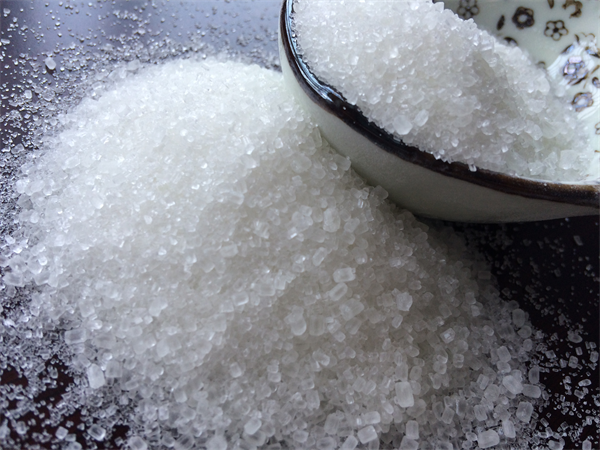
Discountable price Agricultural Grade Ammonium Sulphate Fertilizer Tech Grade Nh4so4 Ammonium Sulphate
To be a result of ours specialty and service consciousness, our enterprise has won an excellent status between buyers all around the globe for Discountable price Agricultural Grade Ammonium Sulphate Fertilizer Tech Grade Nh4so4 Ammonium Sulphate, We have been normally seeking forward to forming profitable company relationships with new clientele around the environment.
To be a result of ours specialty and service consciousness, our enterprise has won an excellent status between buyers all around the globe for Ammonium Sulphate and Agricultural Grade Ammonium Sulphate, Thus far, our item associated with printer dtg a4 may be shown in most foreign nations as well as urban centers, which are sought after simply by targeted traffic. We all highly imagine that now we have now the full capacity to present you with contented merchandise. Desire to collect requests of your stuff and produce the long-term co-operation partnership. We very seriously promise:Csame top quality, better price; exact same selling price, higher quality.
Specifications:
| Item | Results |
| Appearance | Crystals |
| Nitrogen | ≧21% |
| Moisture | ≦0.5% |
| Particle size | 0.1-1mm |
| Color | White Crystals |
Description:
Ammonium sulfate is an excellent nitrogen fertilizer, suitable for general soil and crops. It can make branches and leaves grow vigorously, improve the quality and yield of fruits, and enhance the resistance of crops to disasters. It can be used as base fertilizer, top dressing and seed fertilizer. It can undergo double decomposition reaction with salt to produce ammonium chloride, react with aluminum sulfate to produce ammonium alum, and produce refractory materials together with boric acid. Adding to the electroplating solution can increase conductivity. It is also a catalyst for food sauce color, a nitrogen source for cultivating yeast in the production of fresh yeast, acid dye dyeing auxiliary, and leather deliming agent. In addition, it is also used in beer brewing, chemical reagents and battery production. Another important role is to mine rare earths. Mining uses ammonium sulfate as raw material, exchanges the rare earth elements in the ore in the form of ion exchange, and then collects the leachate to remove impurities, precipitate, squeeze, and burn to become rare earth ore. 1 ton of rare earth ore requires about 5 tons of ammonium sulfate.
There are also many biological uses, mostly used in protein purification processes, because ammonium sulfate is an inert substance and is not easy to react with other biologically active substances. It can protect protein activity to the greatest extent during the purification process. In addition, ammonium sulfate is extremely soluble Well, it can form a high-salt environment to prepare for protein precipitation and subsequent high-salt purification. The solubility of ammonium sulfate at zero degrees and 25 degrees at room temperature is quite different. The following is the molar concentration of ammonium sulfate at different saturations at two temperatures.
Industrially, it is obtained by the direct neutralization reaction of ammonia and sulfuric acid. It is not used much before. It mainly uses by-products in industrial production or the exhaust gas discharged by sulfuric acid or ammonia water (such as sulfuric acid to absorb coke oven gas The ammonia, ammonia water absorbs sulfur dioxide in the flue gas of the smelter, the ammonia in the production of Capron or the sulfuric acid waste in the production of titanium dioxide by the sulfuric acid method). There are also ammonium sulfates produced by the gypsum method (using natural gypsum or phosphogypsum, ammonia, and carbon dioxide as raw materials).
Uses
For a long time, mainly used as fertilizer, suitable for various soils and crops. It can also be used in textiles, leather, medicine, etc. Edible ammonium sulfate is prepared by adding industrial ammonium sulfate to distilled water to dissolve, adding an arsenic removing agent and a heavy metal removing agent for solution purification, filtration, evaporation and concentration, cooling and crystallization, centrifugal separation, and drying. Used as a food additive, as a dough regulator and yeast nutrient.
Products categories
-
Professional China Calcium Ammonium Nitrate wit...
-
Factory Supply Magnesium Sulphate Agriculture A...
-
China OEM Grey Granular Magnesium Sulphate Mono...
-
Quality Inspection for High Quality Granular Ur...
-
OEM/ODM Supplier Factory Supply 99% Powder Anhy...
-
Supply OEM/ODM China NPK Compound Fertilizer 18...